
AED's
AED for Rescue: A Complete Guide to How Automated External Defibrillators Save Lives
Nov
When a cardiac emergency occurs, every second becomes a critical determinant of survival. Among all medical devices designed for emergency response, the Automated External Defibrillator (AED) stands out as one of the most powerful, life-saving tools available to the public. An AED is not just a machine; it is a lifeline that bridges the gap between sudden cardiac arrest and the arrival of professional medical assistance. Understanding what an AED is, how it works, and why it is essential in rescue situations can dramatically influence the outcome of life-threatening events.
Sudden cardiac arrest (SCA) is one of the most urgent medical emergencies, occurring when the heart abruptly stops functioning correctly. Unlike a heart attack, which is caused by blocked blood flow, sudden cardiac arrest is an electrical malfunction of the heart. The heart may flutter, quiver, or stop beating entirely, and without immediate intervention, survival chances decrease rapidly. This is the moment when an AED becomes essential. It provides a shock—known as defibrillation—to restore a normal, organized heartbeat.
AEDs: What They Are and How They Function
An automated external defibrillator is a portable, intelligent device that analyzes heart rhythm and delivers an electric shock if needed. The device is designed to be simple enough for untrained bystanders to use effectively. Its entire purpose is to make life-saving intervention possible before advanced medical help arrives.
- Modern AEDs feature voice instructions, visual prompts, and built-in safety mechanisms.
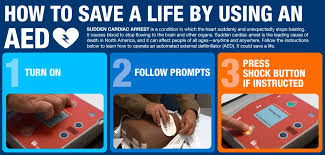
- Once the device is powered on, it takes the user step-by-step through the process: attaching pads, analyzing the heart rhythm, and advising whether a shock is required.
- If a shock is necessary, the AED prepares itself and instructs the user when to press the shock button or, in fully automatic units, delivers the shock itself.
- This simplicity is intentional because most sudden cardiac arrests happen outside of medical facilities—in homes, workplaces, public areas, and community settings where trained professionals may not be immediately available.
- AEDs use adhesive electrode pads placed on the chest to detect electrical signals from the heart.
- Once the device evaluates the rhythm, it determines whether the heart is experiencing a shockable arrhythmia, such as ventricular fibrillation or pulseless ventricular tachycardia.
- If so, it delivers the jolt of electricity needed to momentarily stop the chaotic electrical activity, allowing the heart to reset and potentially resume a normal rhythm.
Why AEDs Are Critical in Rescue Situations
In cardiac arrest, time is the most important factor. Without circulation, oxygen fails to reach the brain and other vital organs. Brain injury can begin within minutes, and irreversible damage may occur soon after. CPR helps maintain blood flow temporarily, but CPR alone often cannot convert a deadly arrhythmia back to a normal heartbeat. That is where the AED becomes essential.
Defibrillation is the only effective way to restart a heart that is quivering or electrically unstable. The earlier the shock is delivered, the higher the chances of survival. Even a delay of a few minutes can significantly reduce positive outcomes. This is why AEDs must be easily accessible—in airports, schools, malls, gyms, offices, hotels, sports arenas, and any location where groups of people gather. Public access defibrillation programs have proven that when AEDs are within immediate reach, survival rates rise dramatically.
Another reason AEDs are vital is that sudden cardiac arrest does not discriminate by age, fitness level, or background. It can strike anyone at any time. Having AEDs in common public locations—and ensuring that ordinary people are comfortable using them—turns bystanders into rescuers. In these critical moments, an AED gives them the power to intervene effectively.

How to Use an AED During an Emergency
Although AEDs are designed to be simple, having a clear sense of how to use one can reduce hesitation during a stressful moment. In an emergency, the following general steps apply:
- Check the person for responsiveness
If they are unresponsive, not breathing, or gasping, you must act immediately.
- Call emergency services
Whether alone or in a group, ensure emergency help is on the way.
- Begin CPR immediately
While another person retrieves the AED, CPR should continue. If you are alone, begin CPR for a short period and then quickly retrieve the nearest AED if possible.
- Turn on the AED and follow instructions
The device will guide you verbally and visually.
- Place the electrode pads as shown on the diagrams
One on the upper right chest and the other on the lower left side of the chest.
- Let the AED analyze the heart rhythm
Do not touch the person during the analysis.
- Deliver a shock if advised
Ensure no one is touching the victim before pressing the shock button.
- Resume CPR
After the shock, continue CPR until the device instructs otherwise or emergency help arrives.
AEDs incorporate safety features that prevent shocks from being delivered when they are not needed. This reduces the risk of accidental harm and ensures the device is only used when medically necessary.
The Importance of AED Training and Familiarity
Although training is not required to use an AED, familiarity builds confidence. Many workplaces and organizations offer first-aid classes that include hands-on AED practice. This training helps people understand common scenarios, recognize sudden cardiac arrest, and respond quickly without panic. The more people trained in using AEDs within a community or organization, the safer that environment becomes. Even a brief training session can significantly reduce hesitation and increase response speed, which directly affects outcomes.
Beyond training, proper AED maintenance is crucial. Batteries must be charged, and electrode pads should be replaced before expiration. Many AED units conduct self-checks and display alerts if something is wrong. Businesses and public facilities should designate personnel to check AED readiness regularly to ensure the device is always prepared for use.
AED Accessibility and Community Preparedness
Making AEDs widely accessible transforms communities into safer places. Schools equipped with AEDs have been able to save student athletes who suffered sudden cardiac arrest during practice. Gyms and sports arenas benefit greatly from having these devices on-hand, as intense physical activity can sometimes trigger cardiac events.
Even residential communities can benefit. More neighborhoods and homeowner associations are placing AEDs in common areas, near pools, parks, and community centers. As awareness grows, the presence of AEDs becomes as standard as fire extinguishers—tools that are rarely used but invaluable when needed.
Conclusion
An AED is one of the most transformative tools in emergency medicine. Its ability to deliver life-saving treatment before advanced medical help arrives makes it essential in any environment where people live, work, or gather. Fast, accessible, and easy to use, AEDs empower bystanders to take immediate action during sudden cardiac arrest—a situation where every second counts. By increasing awareness, improving availability, and encouraging confidence in their use, communities can significantly enhance survival rates and be better prepared to respond to life-threatening events.
FAQs
1. Do you need medical training to use an AED?
No. AEDs are designed for use by ordinary people without medical experience. The device gives clear spoken and visual instructions, and safety features prevent accidental shocks. However, basic CPR/AED training helps build confidence and improves response time.
2. Can an AED be used on children?
Yes, AEDs can be used on children. Many AEDs come with pediatric pads or a child mode that adjusts the energy level appropriately. If pediatric pads are unavailable, standard adult pads may be used in an emergency, placing them according to the device instructions.
3. What happens if an AED is used on someone who isn’t in cardiac arrest?
The AED will analyze the heart rhythm and will not deliver a shock unless it detects a shockable rhythm. This built-in safety mechanism prevents harm and ensures that the device only activates when truly needed.

 info@calmedequipment.com
 1 (888) 912-2563
 1891 N Gaffey Street Suite E, San Pedro CA 90731


